Subscribe Us

thumbnail

What is Java language in simple words?

What is Java language in simple words?


What is Java language in simple words?


Java is a popular, high-level programming language that has been widely used for developing various kinds of applications, ranging from desktop to mobile, web and enterprise applications.


The purpose of this article is to provide a simple and straightforward explanation of Java language for those who are new to programming or seeking to understand Java better.


In the following sections, the article will explain what Java is, its characteristics, its applications, and how one can get started with learning it.


By the end of the article, the reader should have a good understanding of Java language, its features, and why it is a valuable skill to learn in today's tech-driven world.


what is class in java language


What is Java?


Java is a general-purpose, class-based, and object-oriented programming language that was developed by Sun Microsystems (now owned by Oracle) in the mid-1990s.


It was designed to be portable, allowing programs to run on any device with a Java Virtual Machine (JVM), and secure, with built-in security features that prevent malicious code from executing.


Java syntax is based on C++, but it has simplified the language by removing some of the more complex features and adding automatic memory management.


Since its release, Java has become one of the most widely used programming languages in the world, with millions of developers using it for developing a wide variety of applications.


Java has a vast library of pre-written code that developers can use to speed up the development process, making it easier and quicker to develop robust and secure applications.


what is objects in java


Characteristics of Java


1. Object-Oriented Programming Language: 

Java is an object-oriented programming language, meaning it is based on the concept of objects and classes, which helps in organizing complex data and operations in a structured manner.


2. Platform-Independent: 

Java is platform-independent, meaning the same Java program can run on different devices and operating systems without any modification. Java achieves this through the use of the Java Virtual Machine (JVM), which interprets compiled Java code into machine-specific code.


3. Robust and Secure: 

Java is designed to be robust and secure, with features such as automatic memory management, exception handling, and type checking, which prevent common programming errors and prevent malicious code from executing.


4. Dynamic and Extensible: 

Java is a dynamic language, meaning that objects can be dynamically created and manipulated at runtime. Additionally, Java is extensible, meaning new classes and methods can be added to the Java libraries as needed.


5. Multi-Threaded: 

Java supports multi-threading, meaning it can handle multiple tasks simultaneously, making it well-suited for developing complex and high-performance applications.


What are the four components of Java?


Uses of Java


1. Web Development: 

Java is widely used for developing dynamic and interactive websites and web applications. Java-based technologies such as JavaServer Pages (JSP) and Java Servlets make it easy for developers to create dynamic and responsive web pages.


2. Mobile App Development: 

Java is a popular language for developing mobile applications, particularly for Android. The Android operating system is built on Java, and many Android applications are developed using Java.


3. Enterprise Applications: 

Java is commonly used for developing enterprise-level applications, such as customer relationship management (CRM) systems and enterprise resource planning (ERP) systems.


4. Embedded Systems: 

Java can also be used for developing embedded systems, such as smart televisions, in-car navigation systems, and medical devices.


5. Gaming and Multimedia: 

Java is used for developing games and multimedia applications, with libraries and tools such as JavaFX making it easy for developers to create rich and interactive graphics.


How to learn Java?


Resources for learning Java

There are many resources available for learning Java, including online tutorials, books, courses, and video tutorials. Some popular online resources include Codecademy, Udemy, Coursera, and YouTube.


Steps to get started: Here are some steps to get started with learning Java:


• Familiarize yourself with the basics of programming concepts such as variables, data types, loops, and functions.


• Install a Java Development Kit (JDK) and Integrated Development Environment (IDE) on your computer, such as Eclipse or IntelliJ IDEA.


• Start with basic Java syntax and concepts, such as classes, objects, and variables.


• Work through tutorials and exercises to practice writing Java code.


• Move on to more advanced topics, such as collections, multithreading, and web development.


• Work on small projects to apply your knowledge and gain practical experience.


• Participate in online communities and forums to ask questions and learn from experienced Java developers.


Note: Learning Java requires time, effort, and practice. It is important to be patient and persistent in your learning journey. The more you practice, the more comfortable you will become with writing and using Java code.


Conclusion


Java is a powerful and versatile programming language that is widely used for developing various kinds of applications.


Its platform-independent nature, robust security features, and vast libraries make it an attractive choice for developers.


With a wide range of resources available, learning Java is easier than ever, and it is a valuable skill to have in today's technology-driven world.


Whether you are a beginner or an experienced programmer, Java is a language worth learning, as it provides the foundation for developing complex and high-performance applications.


In conclusion, Java is a language with a long history and a bright future, and it remains a valuable skill for anyone interested in programming. Whether you are just starting out or seeking to expand your skills, Java is a language worth exploring.

thumbnail

What is the role and impact of MIS in management?

What is the role and impact of MIS in management


The role and impact of MIS in management


The importance of management information systems (MIS) in today's business environment cannot be overstated. With the rapid growth of technology and the increasing reliance on digital systems, organizations of all sizes and industries are turning to MIS to support their operations, improve decision-making, and gain a competitive edge.


MIS is defined as a system that provides managers with accurate and timely information needed to make effective decisions. It encompasses a wide range of technologies and processes, including data management, software applications, networking, and analytics. The role of MIS in management is to support the collection, storage, processing, and dissemination of information throughout the organization.


In this article, we will take a closer look at the role and impact of MIS in management. We will discuss how MIS supports decision-making, improves organizational efficiency, and can be used to gain a competitive advantage. By understanding the capabilities and potential of MIS, managers can make better use of the information at their disposal and make more informed decisions that drive business success.


What is MIS and its types?


Role of MIS in decision-making


One of the key roles of MIS in management is to support decision-making. By providing accurate and timely information, MIS enables managers to make better decisions that lead to improved performance and outcomes.


MIS supports different types of decision-making, including operational, tactical, and strategic.

Operational decisions are those that are made on a day-to-day basis, such as scheduling employees or ordering inventory. MIS provides real-time data and information to support these decisions, such as sales data and inventory levels.


Tactical decisions are medium-term decisions that impact the short-term operations of the organization. For example, expanding into new markets, opening new locations, or introducing new products. MIS can provide data and analysis to support these decisions, such as market research, customer demographics, and competitive analysis.


Strategic decisions are long-term decisions that shape the direction and overall strategy of the organization. For example, mergers, acquisitions, or significant investments. MIS can provide data and analysis to support these decisions, such as financial forecasting, and industry trends.


MIS provides managers with the ability to collect, process, and analyze large amounts of data. With the help of advanced analytical tools, MIS can help managers identify patterns, trends, and insights that are not immediately obvious from raw data. This allows managers to make more informed decisions that are based on evidence, not intuition.


Additionally, MIS can also support collaboration and communication within the organization, by providing a shared platform for information sharing, and decision-making. This can lead to better and more efficient decision-making processes, as different departments and teams can work together to analyze data and provide insights.


Essentials of Management Information Systems (MIS)


Impact of MIS on organizational efficiency


Another key role of MIS in management is to improve organizational efficiency by automating and streamlining business processes. By using technology to automate repetitive tasks, MIS can save time and reduce the risk of errors. This leads to increased productivity and cost savings for the organization.


MIS can also improve communication and collaboration within the organization. With the help of MIS, employees can share information and work together on projects more easily, regardless of their location. This can lead to faster and more efficient decision-making processes, as well as improved coordination and cooperation between different departments and teams.


Automation of business processes through the use of enterprise resource planning (ERP) systems, customer relationship management (CRM) systems, and supply chain management (SCM) systems, can also lead to cost savings for the organization. For instance, automation of procurement process through an ERP system can lead to cost savings by reducing the need for manual labor and increasing transparency, thus reducing the chances of fraud. Similarly, automation of sales process through a CRM system can lead to cost savings by reducing the need for manual labor, and increasing visibility into customer data, thus leading to better targeting of customers and better sales outcomes.


MIS can also provide organizations with a better understanding of their operations and performance, by providing real-time data on key performance indicators (KPIs). This can help managers identify areas where the organization is performing well, as well as areas that need improvement. By using this information to make data-driven decisions, organizations can improve their overall performance and competitiveness.


What are the advantages and disadvantages of information management systems?


MIS and competitive advantage


One of the most significant impacts of MIS in management is the ability to gain a competitive advantage. By providing accurate and timely information, MIS enables organizations to make better decisions that lead to improved performance and outcomes, which in turn can help them to stand out from their competitors.


For example, companies that use MIS to gain a competitive edge may use data analytics to identify new opportunities in the market, or to optimize their pricing strategy. By analyzing sales data, customer data and other relevant information, they can gain a deeper understanding of their customers and the market, and use this information to create more effective marketing campaigns, improve product development, and gain a better understanding of their competition.


Additionally, the use of MIS can also help companies to create and maintain a strong online presence. By using web-based technologies and social media, companies can connect with customers and partners in new ways, and create new business opportunities. This can lead to increased brand awareness, improved customer engagement, and ultimately, increased sales.


Companies that have used MIS to gain a competitive edge include Amazon, which uses data analytics to optimize its pricing strategy and recommend products to customers. Wal-Mart uses its logistics and supply chain management system to have real-time visibility of inventory across its entire supply chain, thus allowing them to optimize inventory levels and reduce costs.


What is SDLC and its types?


Conclusion


The role and impact of Management Information Systems (MIS) in management are significant and far-reaching. MIS is a vital tool for decision-making, organizational efficiency, and gaining a competitive advantage. By providing accurate and timely information, automating and streamlining business processes, and enabling better understanding of operations and performance, MIS can help organizations to improve their overall performance and competitiveness.


MIS plays a crucial role in supporting operational, tactical and strategic decision-making by providing real-time data, market research, customer demographics, and competitive analysis. It also improves organizational efficiency by automating repetitive tasks, and by improving communication and collaboration within the organization.


By using data analytics and advanced analytical tools, organizations can gain a deeper understanding of their customers and the market, which can lead to more effective marketing campaigns, improved product development, and better understanding of the competition. Additionally, by creating and maintaining a strong online presence, companies can connect with customers and partners in new ways, and create new business opportunities.


In today's fast-paced business environment, the use of MIS has become an essential element for organizations to stay competitive. As such, organizations must invest in MIS to improve their overall performance and competitiveness.

thumbnail

What is SDLC and its types?

What is SDLC and its types?


What is SDLC and its types?


Begin by briefly introducing what SDLC (Software Development Life Cycle) is and why it is important in software development. You can explain that SDLC is a process or methodology that outlines the steps involved in the development of software, from the initial planning stages to the final deployment and maintenance.


Mention that SDLC is essential in ensuring that software is developed in a structured, organized, and efficient manner. It helps to reduce errors, improve quality, and increase customer satisfaction.


Preview the sub-topics that will be covered in the article, such as the different types of SDLC models, the phases of the SDLC, and the benefits and drawbacks of each model.


Provide a brief overview of the article, including a summary of the main points that will be covered, in order to give the reader an idea of what to expect from the article.


Finally, you can add a sentence to create interest and entice the reader to continue reading such as: "This article will dive deep into the different types of SDLC models, such as Waterfall, Agile, Scrum, Spiral, etc. and explain how to choose the right one for your next software development project."


What is SDLC?


Start by defining SDLC and explaining its purpose. You can explain that SDLC is a process or methodology that outlines the steps involved in the development of software, from the initial planning stages to the final deployment and maintenance.


Describe the different phases of SDLC. These typically include:

1. Planning: 

In this phase, the project's goals and objectives are defined, the scope of the project is determined, and a project plan is created.


2. Analysis: 

In this phase, the requirements for the software are gathered and analyzed. This includes identifying the needs of the users, the functions the software must perform, and any constraints or limitations.


3. Design: 

In this phase, the architecture and overall design of the software are created. This includes the design of the user interface, the database schema, and the overall system architecture.


4. Development: 

In this phase, the real coding and development of the software takes place.


5. Testing: 

In this phase, the software is tested for bugs and defects. Different types of testing are performed, such as unit testing, integration testing, and acceptance testing.


6. Deployment: 

In this phase, the software is deployed to the production environment and made available to users.


7. Maintenance: 

In this phase, the software is maintained and updated to address any issues or bugs that are discovered after deployment.


Mention how SDLC helps to ensure that software is developed in a structured, organized, and efficient manner. It helps to reduce errors, improve quality, and increase customer satisfaction.


You can also mention that SDLC is a cyclic process, which means that at any point in time, the development team may need to revisit any of the phases, depending on the requirement and feedback.


You can also include a brief comparison of traditional SDLC models with modern ones like Agile, DevOps, and Continuous Integration/Continuous Deployment (CI/CD) and mention how they are widely used in industry.


Types of SDLC


Explain that there are different types of SDLC models that are used in software development, each with their own unique characteristics and benefits. Some of the most commonly used models include:


1. Waterfall Model: 

This is a linear, sequential model in which each phase of the SDLC must be completed before the next phase can begin.


2. Agile Model: 

This model emphasizes on flexibility, collaboration, and rapid iteration. Agile development teams work in sprints and deliver working software incrementally.


3. Scrum: 

This is an Agile framework that is widely used for managing and completing complex projects.


4. Spiral Model: 

This model is a combination of both the Waterfall and the Agile model, it is used for high-risk projects and it allows for multiple iterations of the different phases of the SDLC.


5. DevOps: 

This is not a software development model but a culture and set of practices that aims to increase the speed and quality of software delivery by promoting collaboration and communication between development and operations teams.


6. Continuous Integration and Continuous Deployment (CI/CD): 

This model is a set of practices that aims to automate the software development process and make it more efficient. It includes practices such as continuous integration, continuous testing, and continuous delivery.


Compare and contrast the different models, highlighting their strengths and weaknesses. For example, the Waterfall model is a good choice for projects with well-defined and unchanging requirements, while the Agile model is better suited for projects with changing requirements. Scrum is a good choice for complex projects where a lot of collaboration is needed. Spiral model is a good choice for high-risk projects where flexibility is key. DevOps is a good choice for organizations that want to improve their software delivery process and reduce lead time. CI/CD is a good choice for organizations that want to automate their software development process and improve efficiency.


Provide examples of when different models might be most appropriate. For example, the Waterfall model is often used for projects such as building bridges or constructing buildings where the requirements are well-defined and unchanging, while the Agile model is often used for software development projects where requirements are likely to change.


Mention that the choice of SDLC model depends on various factors such as the type of project, the size of the project, the complexity of the project, the organization's culture and development process.


Advantages and Disadvantages of SDLC


Advantages of SDLC:


1. Improved project management: 

By following a structured approach, project managers are able to plan and execute software development projects more effectively. This can lead to better use of resources, improved timelines, and increased efficiency.


2. Increased quality: 

By following a defined process, software development teams are able to identify and address potential issues early in the development cycle. This can prompt to a higher-quality end product.


3. Better customer involvement: 

Many SDLC models, such as the Waterfall model and the Agile model, include opportunities for customer involvement throughout the development process. This can lead to a better understanding of customer needs and improved customer satisfaction.


4. Better collaboration: 

SDLC models that use an iterative or incremental approach can foster better collaboration between development teams and other stakeholders. This can lead to improved communication, more efficient problem-solving, and increased productivity.


Disadvantages of SDLC:


1. Inflexibility: 

Some SDLC models, such as the Waterfall model, can be inflexible and may not allow for changes or adjustments to be made once development has begun.


2. Lack of customer involvement: 

Some SDLC models, such as the V-Model, may not include opportunities for customer involvement until later stages of the development process. This can lead to a lack of understanding of customer needs and dissatisfaction with the end product.


3. High cost: 

Some SDLC models, such as the Spiral model, can be expensive to implement and may not be suitable for small or budget-constrained projects.


4. Time-consuming: 

SDLC models that follow a structured approach can be time-consuming and may not be suitable for projects with tight deadlines.


It is important to consider the specific needs of a project and the resources available when choosing an SDLC model. Each model has its advantages and disadvantages, and the right model will depend on the specific project requirements.


Conclusion


The Systems Development Life Cycle (SDLC) is a structured approach to software development that includes a series of phases and activities to plan, design, build, test, and deploy software applications. There are several types of SDLC models, each with its own unique features and characteristics, such as Waterfall model, Agile model, V-Model, Spiral model, and Iterative and Incremental Model. It is important to choose the right type of SDLC for a specific project based on its requirements and resources available.


The use of SDLC approach in software development can bring many benefits, such as improved project management, increased quality, better customer involvement and better collaboration. However, there are also some disadvantages such as inflexibility, lack of customer involvement, high cost and time-consuming.


It is important to keep in mind that SDLC is not a one-size-fits-all solution and different projects may require different approaches. Therefore, it is essential for software development teams to understand the various SDLC models and to choose the one that best suits the specific project. By doing so, software development teams can ensure that projects are completed on time, within budget and to the satisfaction of all stakeholders.

thumbnail

What are the advantages and disadvantages of information management systems?

Advantages and Disadvantages of MIS


Advantages and Disadvantages of MIS


Management information systems (MIS) are computer-based systems that provide managers with the information they need to make informed decisions. In today's fast-paced business world, organizations rely heavily on MIS to stay competitive and operate efficiently. The use of MIS has become increasingly widespread, with most organizations using some form of technology to manage and analyze data. While the advantages of using an MIS are many, it is also important to consider the potential drawbacks. In this article, we will explore both the advantages and disadvantages of MIS, providing a comprehensive overview of the subject. We will discuss how MIS can improve decision-making, increase efficiency and productivity, improve communication and collaboration, and provide a competitive advantage. We will also discuss the potential downsides of MIS, such as the risk of data overload and system failures, the high cost of implementation, and security concerns.


Advantages of MIS


1. Improved Decision-Making: 

One of the primary advantages of MIS is its ability to provide real-time information to managers, enabling them to make more informed decisions. With accurate and up-to-date data, managers can identify trends, forecast future performance, and respond quickly to changes in the market. This can help organizations to be more proactive, rather than reactive, in their decision-making.


2. Increased Efficiency and Productivity: 

MIS can also help organizations to increase efficiency and productivity by automating repetitive tasks. For example, an MIS can automatically generate reports, perform data analysis, and update inventory levels. This frees up employees to focus on more important tasks, such as customer service and problem-solving.


3. Improved Communication and Collaboration: 

MIS can also improve communication and collaboration within an organization. By providing a centralized location for data and information, MIS can help to break down silos and promote teamwork. This can also make it easier for employees to access the information they need to do their jobs.


4. Competitive Advantage: 

Another advantage of MIS is that it can give organizations a competitive advantage by providing access to valuable data and insights. With an MIS, organizations can gain a better understanding of their customers, competitors, and market trends. This can help them to make better decisions, develop new products and services, and improve their overall performance.


5. Improved Customer Service: 

An MIS can also improve customer service by providing employees with the information they need to respond to customer inquiries and complaints quickly and effectively. This can help to increase customer satisfaction and loyalty.


6. Improved Strategic Planning: 

An MIS can also help organizations to improve strategic planning by providing managers with the information they need to set goals and develop plans to achieve them. This can help organizations to be more proactive in their approach to business and to stay ahead of the competition.


7. Improved Business Performance: 

Overall, the use of an MIS can improve business performance by providing managers with the information they need to make better decisions, increase efficiency and productivity, improve communication and collaboration, and gain a competitive advantage.


Disadvantages of MIS


1. Data Overload and Information Overload: 

One of the potential downsides of MIS is the risk of data overload and information overload. With so much information available, it can be difficult for managers to identify the most important data and make sense of it. This can lead to confusion and poor decision-making.


2. High Cost of Implementation and Maintenance: 

Another disadvantage of MIS is the high cost of implementation and maintenance. Organizations need to invest in hardware, software, and personnel to set up and maintain an MIS. This can be a significant expense for small or medium-sized businesses.


3. Dependency on Technology: 

MIS also leads to dependency on technology, which can lead to system failures and disrupt business operations. This can be particularly problematic for organizations that rely heavily on their MIS for day-to-day operations.


4. Security Concerns: 

Additionally, there are security concerns when it comes to MIS. Hackers and cybercriminals may attempt to gain unauthorized access to sensitive information stored in the system, which can lead to data breaches and loss of confidential information.


5. Privacy Concerns: 

Organizations also have to be mindful of the privacy concerns of their customers, employees, and stakeholders. Misuse of data can lead to legal repercussions and damage to reputation.


6. Lack of Flexibility: 

Another disadvantage of MIS is its lack of flexibility. Once an MIS is implemented, it can be difficult to make changes to the system without incurring significant costs. This can make it difficult for organizations to adapt to changing business conditions.


7. Limited Access to Information: 

Finally, there may be limited access to information for certain employees or departments within an organization, which can restrict their ability to perform their job functions effectively.


It's important to consider the potential downsides of MIS before implementing it in an organization, and have contingency plans in place to mitigate the risks and negative impacts.


Conclusion


Management Information Systems (MIS) can bring many benefits to organizations, such as improved decision-making, increased efficiency and productivity, improved communication and collaboration, and a competitive advantage. However, it's important to be aware of the potential disadvantages, such as data overload, high cost of implementation and maintenance, dependency on technology, security and privacy concerns, lack of flexibility, and limited access to information.


When considering implementing an MIS, organizations should weigh the benefits against the potential downsides and ensure that they have a solid plan in place for addressing any issues that may arise. It's also important to keep in mind that an MIS is not a one-time investment, but rather a continuous process of improvement and adaptation.


A well-designed and maintained MIS can improve the overall performance of an organization and help it to achieve its goals and objectives. Organizations that take the time to carefully plan and implement an MIS can reap the benefits and gain a significant competitive advantage over those that do not.

thumbnail

Essentials of Management Information Systems (MIS)

Essentials of Management Information Systems


Essentials of Management Information Systems


The introduction of an article on the essentials of management information systems (MIS) should provide a clear and concise overview of the topic. It should define what management information systems are and explain their importance in organizations. It could also provide a brief history of the development of MIS and its evolution over time.


An MIS is a system that utilizes technology, people, and data to provide managers with the information they need to make decisions. It includes the hardware, software, and databases that collect, store, and process data, as well as the people who operate and use the system. An MIS is critical for organizations to be able to analyze and make sense of the vast amounts of data they collect, and to use this information to make informed decisions and improve performance.


The introduction should also set the context for the rest of the article by previewing the main topics that will be covered, such as the components of an MIS, its role in decision making, the impact of technology on the field, and the future of MIS.


Overall, the introduction should engage the reader and provide a clear understanding of the importance and relevance of the topic.


The Components of an MIS


The components of an MIS are the building blocks that make up the system. They include hardware, software, data, and people.


1. Hardware: 

This refers to the physical components of an MIS such as servers, computers, and storage devices. These components are responsible for storing, processing, and transmitting data within the system. They also include peripherals such as printers and scanners that are used to input and output data.


2. Software: 

This refers to the programs and applications that are used to manage and process data. This includes both system software such as the operating system and database management systems, as well as application software such as spreadsheets, word processors, and enterprise resource planning (ERP) systems.


3. Data: 

Data is the foundation of an MIS. It includes all the information that is collected, stored, and processed by the system. Data can come in many forms such as text, images, and audio, and can be structured or unstructured. It can be stored in databases, data warehouses, or cloud-based services.


4. People: 

People are an integral part of an MIS. They include the users, administrators, and managers who operate and use the system. They are responsible for inputting, analyzing, and interpreting data, as well as making decisions based on the information provided by the system.


It is important to note that all of these components work together to provide managers with the information they need to make decisions. Hardware and software provide the infrastructure and tools for data management, while data and people provide the input and interpretation of the information.


Overall, understanding the components of an MIS is essential for understanding how the system functions and how it can be used to support decision-making in an organization.


The Role of an MIS in Decision Making


The role of an MIS in decision making is to provide managers with the information they need to make informed decisions. It does this by collecting, storing, and processing data, and then presenting it in a meaningful way.


1. Data collection: 

An MIS is responsible for collecting data from various sources such as sales transactions, customer feedback, and operational data. This data is then stored in databases or data warehouses for further analysis.


2. Data analysis: 

Once data is collected, it must be analyzed to extract meaningful information. An MIS uses a variety of tools such as spreadsheets, data visualization software, and business intelligence (BI) tools to analyze data and identify trends and patterns.


3. Data presentation: 

The final step in the decision-making process is to present the information in a way that is easy for managers to understand and act upon. An MIS uses various methods such as reports, dashboards, and alerts to present the information in a clear and concise format.


An MIS can support different types of decision making, such as operational, tactical, and strategic. For example, operational decision making might involve using the system to monitor and control day-to-day operations, tactical decision making might involve using the system to analyze sales data and identify areas for improvement, and strategic decision making might involve using the system to analyze long-term trends and identify new opportunities for growth.


Overall, the role of an MIS in decision making is to provide managers with timely and accurate information, to support different types of decision making, and to help organizations to improve their performance and competitive advantage.


The Impact of Technology on MIS


The impact of technology on management information systems (MIS) has been significant and ongoing. The development and advancement of technology has enabled MIS to become more powerful, efficient, and accessible.


1. Data storage and processing: 

One of the major impacts of technology on MIS has been the ability to store and process large amounts of data. With the advent of big data and cloud computing, organizations can now store and process vast amounts of data in real-time. This allows for more accurate and timely analysis of data, leading to better decision making.


2. Business Intelligence: 

The development of business intelligence (BI) tools and software has also had a major impact on MIS. BI tools enable organizations to analyze data and extract insights, providing managers with the information they need to make informed decisions.


3. Automation and Artificial Intelligence: 

With the growth 5. nd artificial intelligence (AI), organizations can now automate many of the routine tasks associated with data collection, analysis, and presentation. This frees up resources and allows managers to focus on more important tasks.


4. Mobile and Cloud-based access: 

The widespread use of mobile devices and cloud-based access has also had a major impact on MIS. This allows managers to access information from anywhere, at any time, leading to more efficient and effective decision making.


5. Cybersecurity: 

With the increase of digitalization, the importance of cybersecurity in MIS has grown as well. Organizations need to protect their sensitive data and systems from cyber-attacks, ensuring the security and integrity of the information.


Overall, the impact of technology on MIS has been significant. It has enabled organizations to store and process large amounts of data, analyze it quickly and effectively, and make better decisions. It has also led to automation, mobile and cloud-based access, and more focus on cybersecurity.


The Future of MIS


The future of management information systems (MIS) is likely to be shaped by advances in technology, changes in business practices, and the emergence of new trends.


1. Artificial Intelligence and Machine Learning:

Artificial intelligence (AI) and machine learning (ML) are expected to play an increasingly important role in the future of MIS. These technologies will enable organizations to analyze large amounts of data and make predictions about future trends and patterns. This will lead to more accurate and timely decision making.


2. Internet of Things: 

The Internet of Things (IoT) is also expected to have a significant impact on the future of MIS. IoT devices will generate vast amounts of data, which will need to be analyzed and used to improve operations and decision making.


3. Cloud Computing: 

Cloud computing will continue to play a major role in the future of MIS. Cloud-based services will provide organizations with the ability to store and process large amounts of data at a lower cost, and to access information from anywhere at any time.


4. Blockchain: 

Blockchain technology is expected to have an impact on the future of MIS. It will provide a secure and transparent way to store and share data, making it useful for applications such as supply chain management and financial transactions.


5. Cybersecurity: 

The future of MIS will also be shaped by the need to protect sensitive data and systems from cyber-attacks. Organizations will need to implement advanced security measures to ensure the security and integrity of their information.


Overall, the future of MIS is likely to be shaped by advances in technology, changes in business practices, and the emergence of new trends. This will lead to more powerful, efficient, and accessible systems, enabling organizations to make better decisions and improve their performance.


Conclusion


Management information systems (MIS) play a crucial role in today's organizations by providing managers with the information they need to make informed decisions. An MIS is made up of various components, including hardware, software, data, and people. It collects, stores, and processes data, and then presents it in a meaningful way.


An MIS supports different types of decision making, such as operational, tactical, and strategic. The impact of technology on MIS has been significant, enabling organizations to store and process large amounts of data, analyze it quickly and effectively, and make better decisions. Automation, mobile and cloud-based access, and cybersecurity also have great importance in MIS.


The future of MIS will be shaped by advances in technology, changes in business practices, and the emergence of new trends. Artificial intelligence and machine learning, IoT, cloud computing, blockchain, and cybersecurity will play a major role in the future of MIS. These technologies will provide organizations with the ability to make better decisions, improve performance, and stay competitive in today's fast-paced business environment.


thumbnail

What is MIS and its types? | Management Information System

What is MIS and its types?

What is MIS and its types?


Management Information Systems (MIS) is a term used to describe the systems and processes that organizations use to gather, store, process, and analyze data in order to make better decisions. These systems typically involve the use of technology, such as computer hardware and software, to automate and streamline business processes.


Importance of MIS in modern
organizations


In today's fast-paced and competitive business environment, organizations rely heavily on accurate and timely information to make strategic decisions. MIS plays a critical role in providing this information by collecting, processing, and delivering data to the right people at the right time. This can help organizations improve efficiency, increase revenue, and reduce costs. 


● Brief overview of the types of MIS


There are many types of MIS, each with its own specific functions and goals. Some common types include operational-level systems, management-level systems, and strategic-level systems. In this article, we will explore each of these types in more detail and discuss how they can be used to support decision-making and achieve organizational goals.


What is Management Information Systems (MIS)?

● Explanation of the functions and goals of MIS


The main functions of MIS are to collect, process, store and disseminate information to support the decision-making process of an organization. It provides the necessary information to support the operations, management, and planning of an organization. It's goal is to enhance the efficiency and effectiveness of the decision-making process by providing relevant, accurate, and timely information.


● How MIS supports decision-making and helps organizations achieve their objectives


MIS helps organizations make better decisions by providing them with the information they need to identify opportunities, evaluate alternatives, and select the best course of action. By automating and streamlining data collection, processing, and analysis, MIS can also help organizations improve efficiency, reduce costs, and increase revenue.


● The role of technology in MIS


Technology plays a crucial role in MIS, as it enables organizations to gather, store, process, and analyze large amounts of data quickly and accurately. This includes computer hardware such as servers, storage devices, and networking equipment, as well as software applications like databases, data analysis tools, and business intelligence platforms. Additionally, technology enables the integration of different systems and data sources, providing a single view of the organization to support the decision-making process.


Types of Management Information Systems:

● Operational-level systems


Operational-level systems, also known as transaction processing systems, are used to support the day-to-day operations of an organization. Examples include point-of-sale systems, inventory management systems, and payroll systems. These systems are designed to automate and streamline routine business processes, such as processing sales transactions, tracking inventory levels, and calculating employee pay. They provide real-time data that is used to monitor and control the operations of the organization.


● Management-level systems


Management-level systems, such as decision support systems (DSS) and executive information systems (EIS), are used to support the management and planning activities of an organization. DSS provide managers with the tools they need to analyze data and make informed decisions, while EIS provide executives with a high-level view of the organization's performance. These systems are designed to help managers and executives make strategic decisions by providing them with data that is not available through operational-level systems.


● Strategic-level systems


Strategic-level systems, such as enterprise resource planning (ERP) systems and supply chain management (SCM) systems, are used to support the long-term planning and strategy of an organization. ERP systems integrate all the functions of an organization, such as finance, human resources, and manufacturing, into a single system. SCM systems are used to manage the flow of goods and services from suppliers to customers. These systems provide a holistic view of the organization and its environment, allowing managers to make informed decisions that support the long-term goals of the organization.


Implementing and Managing an MIS


Steps for planning and implementing an MIS:


Implementing an MIS typically involves several steps, including: 


1. Identifying the information needs of the organization and its stakeholders. 


2. Selecting the appropriate technology and software to support these needs. 


3. Designing and developing the system, including the data architecture, user interface, and security measures. 


4. Testing the system to ensure it meets the requirements and functions as intended. 


5. Deploying the system and providing training to users. 


6. Monitoring and maintaining the system to ensure it continues to meet the needs of the organization


Challenges and best practices for managing and maintaining an MIS: 


Managing and maintaining an MIS can be challenging, as it involves keeping up with the latest technological advances and ensuring the system continues to meet the needs of the organization. Some common challenges include: 


- Ensuring data accuracy and integrity. 


- Keeping the system secure from unauthorized access. 


- Managing and maintaining the system's hardware and software. 


- Keeping up with changing business requirements. 


- Providing ongoing support and preparing to users. 


To overcome these challenges, it is important to adopt best practices such as regular system backups, security audits, and implementing disaster recovery plans, as well as regular maintenance of hardware and software. It is also important to involve users in the planning and design process and provide them with ongoing support and training. Additionally, it is important to have a dedicated team or person responsible for the overall management of the system.


Conclusion


In this article, we have discussed what Management Information Systems (MIS) are and how they are used to support decision-making and achieve organizational goals. We have also looked at the different types of MIS, including operational-level systems, management-level systems, and strategic-level systems. We have also covered the steps and best practices for planning, implementing, managing, and maintaining an MIS.


Future trends and advancements in MIS: 


In the future, we can expect to see continued advancements in technology and its integration with MIS. This includes the integration of Artificial Intelligence and Machine Learning capabilities to enhance the decision-making process, as well as the use of cloud-based systems to improve scalability and accessibility. With the increasing amount of data generated by the Internet of Things (IoT) devices and the growth of big data, we can expect to see more powerful and sophisticated data analysis tools.


Call-to-action for further information or consulting services: 


If you are interested in learning more about how to implement and manage an effective MIS or if you need help in optimizing your existing system, please don't hesitate to contact us. Our team of experts can provide you with the guidance and support you need to achieve your organizational goals.

thumbnail

Why Linux is called Ubuntu?

Why Linux is called Ubuntu?


Why Linux is called Ubuntu?


Linux is a free and open-source operating system that is depends on the Unix operating system. It is widely used for servers, supercomputers, and mobile devices, as well as for personal computers. Ubuntu is a popular distribution of Linux that is known for its user-friendly interface and ease of use. The name "Ubuntu" comes from the African philosophy of "humanity towards others," and this concept is central to the development and philosophy of the Ubuntu operating system. In this article, we will explore the meaning of "Ubuntu" and its connection to Linux, as well as the history and features of the Ubuntu operating system.


The meaning of "Ubuntu"


The meaning of "Ubuntu" is rooted in the African philosophy of "humanity towards others." The word Ubuntu comes from the Zulu and Xhosa languages of South Africa, and it is often translated as "I am because we are." The philosophy behind Ubuntu is that the individual's well-being is connected to the well-being of the community, and that individuals should strive to live in harmony with others.


This concept is central to the development and philosophy of the Ubuntu operating system. The creators of Ubuntu intended for the operating system to be a community-driven project that would be accessible to everyone, regardless of their technical expertise. Ubuntu's focus on community and collaboration is reflected in its open-source nature, which allows users to freely access, modify, and distribute the source code.


In addition, Ubuntu's user-friendly interface, ease of installation, and the wide range of software and hardware support are all reflections of the Ubuntu philosophy. The Ubuntu project's goal is to make Linux accessible to everyone and to promote a sense of community among its users. Ubuntu's focus on community, collaboration, and accessibility aligns with the Ubuntu philosophy of "humanity towards others."


● What is Java language in simple words?


The history of Ubuntu


The history of Ubuntu begins with its creation by Mark Shuttleworth, a South African entrepreneur, in 2004. Shuttleworth, who was also the founder of Canoncial Ltd, the company behind Ubuntu, was inspired by the Ubuntu philosophy and wanted to create a Linux distribution that would be accessible to everyone.


The first version of Ubuntu, version 4.10, was released on October 20, 2004. This version was based on Debian and featured a new graphical user interface and a simplified installation process. Over the next few years, Ubuntu quickly gained popularity among Linux users due to its ease of use and regular release schedule, which ensured that users always had access to the latest features and software.


In 2006, Ubuntu 6.06 LTS (Long-term Support) version was released and it was widely adopted by schools and governments, which appreciated the 5-year support for this version. This was also the first version that featured the Unity desktop environment, which became the default interface for Ubuntu until version 17.10.


In 2011, Ubuntu 11.04 introduced the new Unity interface, which was designed to make Ubuntu more touch-friendly and to work well on a variety of devices, including smartphones and tablets. This version also marked the transition to a new release schedule, which featured two releases per year, one in April and one in October.


In recent years, Ubuntu has continued to evolve and improve. The latest version, Ubuntu 20.04 LTS, was released in April 2020, and it included new features such as improved graphics and support for the latest hardware. Ubuntu has also been widely adopted by cloud providers, and it is now one of the most popular Linux distributions for servers and cloud computing.


In summary, Ubuntu has a rich history, starting from a small community-driven project to one of the most widely used Linux distribution, with a solid user base and a wide range of use cases. It has undergone many changes and improvements over the years, but it always stayed true to its philosophy of making Linux accessible to everyone and promoting a sense of community among its users.


● What is Java advantages and disadvantages?


The philosophy behind Ubuntu


The philosophy behind Ubuntu is rooted in the African concept of "ubuntu," which is often translated as "humanity" or "human kindness." The Ubuntu project seeks to embody this philosophy in its approach to software development and community building.


One of the core principles of Ubuntu is the idea of community-driven development. Ubuntu is developed and maintained by a global community of volunteer developers and contributors, who work together to create and improve the operating system. This open and inclusive approach is designed to ensure that Ubuntu is accessible to everyone, regardless of their technical abilities or resources.


Another key principle of Ubuntu is the idea of openness and transparency. The Ubuntu project is built on open-source software, which means that the source code is freely available for anyone to use, modify, and distribute. This allows for a high degree of collaboration and innovation, as well as a level of transparency and accountability that is not possible with proprietary software.


Ubuntu also places a strong emphasis on user-friendliness and ease of use. The operating system is designed to be simple and intuitive, with a focus on making it easy for people to accomplish common tasks without needing technical expertise. This approach is intended to help bridge the digital divide and make technology more accessible to people who might otherwise be left behind.


In addition, Ubuntu also emphasizes on security, stability, and long-term support. Ubuntu releases a new version every six months, with each version supported for nine months. This allows for new features and software updates to be delivered quickly, while also providing a stable and secure environment for users.


Overall, the philosophy behind Ubuntu is to create a welcoming, inclusive, and accessible community of users and developers that works together to create an open-source operating system that is easy to use and free from proprietary restrictions.


Ubuntu's impact on Linux and the technology industry


Ubuntu has had a significant impact on the Linux ecosystem and the technology industry as a whole.


One of the most notable ways that Ubuntu has impacted Linux is by making it more accessible to a wider range of users. Ubuntu is known for its ease of use and user-friendliness, which has helped to attract a large number of new users to the Linux platform. This has helped to increase the overall market share of Linux and make it a more viable alternative to proprietary operating systems.


Ubuntu has also played a major role in the enterprise and cloud computing spaces. Many organizations have adopted Ubuntu as their preferred operating system for servers and cloud deployments. This is due to its stability, security, and long-term support, as well as its ability to integrate with a wide range of other open-source software.


In addition, Ubuntu has contributed to the open-source software community by developing and maintaining a large number of packages and software. Ubuntu is one of the most popular Linux distributions and it has a large number of developers and contributors, so it's easy to find help when needed. Ubuntu has also contributed to the development of other Linux distributions such as Lubuntu, Xubuntu, Kubuntu, etc.


Furthermore, Ubuntu has also been used as a base for other projects such as the mobile operating system, Ubuntu Touch and the Ubuntu for IoT. This shows how flexible and adaptable the Ubuntu operating system can be.


Overall, Ubuntu has played a key role in advancing the Linux ecosystem and the open-source software movement, and has helped to make technology more accessible and inclusive for everyone.


Introduction to management information system


Conclusion


Ubuntu is a unique and important operating system within the Linux ecosystem. Its name is derived from the African concept of "ubuntu," which embodies the principles of community, openness, and user-friendliness. The Ubuntu project is built on these principles, and is developed and maintained by a global community of volunteer developers and contributors.


Ubuntu has had a significant impact on the Linux ecosystem and the technology industry as a whole. It has helped to make Linux more accessible to a wider range of users, and has played a major role in the enterprise and cloud computing spaces. Ubuntu has also contributed to the open-source software community by developing and maintaining a large number of packages and software.


The philosophy behind Ubuntu, which is community-driven development, openness, and transparency, ease of use, security, stability and long-term support, has helped to bridge the digital divide and make technology more accessible to people who might otherwise be left behind.


In short, Ubuntu is not just an operating system, but a community project and a way of thinking, that aims to make technology more accessible, inclusive and available for everyone.

thumbnail

What are the four components of Java?

What are the four components of Java?


What are the four components of Java?


Java is one of the most generally-used programming languages in the world. It is a general-purpose, object-oriented language that was first released by Sun Microsystems in 1995. Java is known for its platform independence, which means that programs written in Java can run on any operating system with a Java Virtual Machine (JVM) installed.


Java is used to create a wide range of applications, from simple desktop programs to complex web applications, mobile apps, and enterprise systems. It is also used in embedded systems, such as smart televisions and Blu-ray players. Due to its ease of use, scalability, and security features, Java has become a popular choice for developers across various industries.


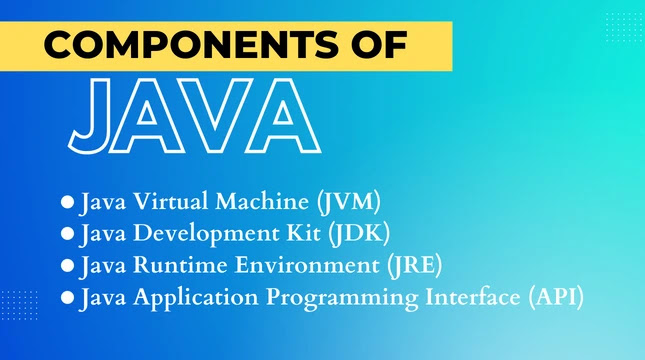
In this article, we will delve deeper into the four components of Java: the Java Virtual Machine (JVM), the Java Development Kit (JDK), the Java Runtime Environment (JRE), and the Java Application Programming Interface (API). These components are integral to the Java ecosystem and understanding them is crucial for any Java developer. We'll go over what each component is, its role in the Java ecosystem, and its benefits.


● What is Java language in simple words?

Java Virtual Machine (JVM)


The Java Virtual Machine (JVM) is the foundation of the Java ecosystem. It is a virtual machine that runs on top of the operating system and provides a runtime environment for Java programs. The JVM interprets compiled Java code and converts it into machine-readable instructions that can be executed by the computer.


The JVM is responsible for several important tasks, including memory management, security, and garbage collection. When a Java program is executed, the JVM allocates memory for the program and manages it throughout the program's execution. This ensures that the program does not consume too much memory, causing the system to crash. The JVM also provides a secure environment for executing Java programs by implementing various security features such as sandboxing and class loading. The JVM also automatically manages the memory used by the program, releasing memory that is no longer needed, this is known as garbage collection.


One of the key benefits of the JVM is platform independence. Java programs are compiled into bytecode, which is a platform-independent format. This means that a Java program can be run on any platform that has a JVM installed. This allows developers to write code once and run it on multiple platforms without modification. This makes Java a popular choice for cross-platform development.


In summary, the Java Virtual Machine (JVM) is the foundation of the Java ecosystem. It provides a runtime environment for Java programs, manages memory, provides security features and enables the platform independence of Java. All of this makes JVM one of the most important components of Java.


● What is Java advantages and disadvantages?

Java Development Kit (JDK)


JDK is a software development environment for Java. It is a collection of tools that developers use to create, debug, and run Java programs. The JDK includes the following components:


Java Compiler: This is the tool that developers use to convert the source code into bytecode, which can be executed by the JVM.


Java Interpreter: This is the tool that developers use to run the Java program without compiling it. It reads the source code and interprets it line by line.


Java Debugger: This is a tool that developers use to debug their Java programs. It allows developers to pause the execution of the program, examine the state of the program, and make changes to the program if necessary.


Java Documentation Generator: This is a tool that developers use to generate documentation for their Java programs. It extracts comments from the source code and generates HTML or PDF documents.


Java Class Library: This is a collection of pre-written Java classes that developers can use in their programs. The class library provides a wide range of functionality, including input/output operations, networking, and graphical user interface components.


The JDK is an essential component for Java development. It provides the necessary tools for developers to write, test and deploy Java applications. The JDK is freely available for download from Oracle's website and it is available for multiple operating systems.


In summary, the Java Development Kit (JDK) is a software development environment for Java. It includes the necessary tools for developers to write, test, and deploy Java programs. The JDK includes the Java compiler, interpreter, debugger, documentation generator, and class library. These tools are essential for Java development and allows developers to create high-quality Java programs.


● Types of Java Applications

Java Runtime Environment (JRE)


The Java Runtime Environment (JRE) is a subset of the JDK and is used to run Java programs. It includes the JVM, the Java class library, and other supporting files. The JRE does not include the development tools that are included in the JDK, such as the compiler and debugger.


The main purpose of the JRE is to provide an environment for executing Java programs. When a Java program is run, the JRE loads the necessary class files, starts the JVM, and executes the program. The JRE also provides the necessary libraries and supporting files for the program to run.


The JRE is available as a separate download from Oracle's website and it is available for multiple operating systems. It can be installed on a system without the JDK, which means that a user can run Java programs without having the development tools.


The JRE provides a convenient way to deploy Java programs. Once a program is compiled, it can be distributed with the JRE, making it easy for users to run the program without having to install the JDK. This is especially useful for end-users who do not need the development tools.


In summary, the Java Runtime Environment (JRE) is a subset of the JDK, and it is used to run Java programs. It includes the JVM, the Java class library, and other supporting files. The JRE is designed to provide an environment for executing Java programs, it can be installed on a system without the JDK, making it easy to deploy Java programs without requiring the development tools and allows end-users to run Java programs on their systems.


● What is thread in java ?

Java Application Programming Interface (API)


The Java Application Programming Interface (API) is a collection of pre-written classes and interfaces that provide a wide range of functionality for Java programs. It is included in the JDK and JRE and is used by developers to create Java programs. The API is organized into packages, which group related classes and interfaces together.


Some of the most commonly used packages in the Java API include:


The collections framework: This package provides classes and interfaces for working with collections of objects, such as lists, sets, and maps.


The I/O package: This package provides classes and interfaces for working with input and output operations, such as reading and writing files and network communication.


The networking package: This package provides classes and interfaces for working with network communication, such as sockets and URLs.


The GUI package: This package provides classes and interfaces for creating graphical user interfaces, such as windows, buttons, and text fields.


The Java API provides a wide range of functionality that makes it easy for developers to create Java programs. It provides a consistent and well-documented way to perform common tasks, such as handling input and output, working with collections of data, and creating graphical user interfaces.


In summary, the Java Application Programming Interface (API) is a collection of pre-written classes and interfaces that provide a wide range of functionality for Java programs. The API is included in the JDK and JRE and is organized into packages, which group related classes and interfaces together. It provides a consistent and well-documented way to perform common tasks, it's a fundamental component of the Java ecosystem, and it is widely used by developers to create high-quality Java programs.


what is class in java language

Conclusion


In this article, we have discussed the four components that make up the Java ecosystem: the Java Virtual Machine (JVM), the Java Class Library, the Java Development Kit (JDK), and the Java Language.


The JVM is responsible for providing the platform independence and security that Java is known for. It interprets the bytecode generated by the Java compiler and executes it on the underlying hardware.


The Java Class Library is a collection of pre-built classes and interfaces that provide a rich set of functionality for common tasks, such as input/output, collections, andorking.


The JDK is a set of tools that are necessary for developing, debugging, and deploying Java applications. It includes the Java compiler, the Java runtime environment, and other tools such as the Java Debugger and JavaDoc.


Finally, the Java Language is the syntax and semantics of the programming language that developers use to write Java programs. Its emphasis on readability and maintainability has made it one of the most popular programming languages in the world.


In conclusion, understanding these four components is crucial for anyone interested in learning or working with the Java programming language. It allows developers to write efficient and secure code and also helps to leverage the vast array of functionality provided by the Java Class Library.

About

Business/feat-big
Powered by Blogger.

Ad Code

Technology, C++, Java, Management...

Food

3/Food/feat-list

Fashion

3/Fashion/grid-small

Ad Space

Recent Blog Posts

TechBuddy. Created by Techly420

Ticker

6/recent/ticker-posts

Tags

4 types of java application advantages and disadvantages for c++ advantages and disadvantages java advantages and disadvantages of c++ language advantages and disadvantages of c++ programming language advantages and disadvantages of cpp advantages and disadvantages of mis advantages of c++ advantages of java advantages of mis advantages of SDLC agile model basic concepts benefit java benefits of management information systems books boolean built-in data types in c++ c++ c++ language c++ what is it used for character codecademy coursera courses creating-objects-in-java data Types decision-makingwithmis declaration define inheritance in c++ derived data types in c++ describe c++ programming language development process disadvantages of mis disadvantages of SDLC essentials of information systems for managers essentials of management information systems essentials of management information systems 14th edition essentials of management information systems pdf floating-point four components of java four types of java function overloading in c++ how-to-create-class-in-java how-to-write-a-class-in-java impactofmis importance of class library in java inheritance in c++ and its types inheritance in c++ definition inheritance in c++ example inheritance in c++ explanation Integer Java java class library java definition java development kit java ecosystem components java information java programming language java types of applications java virtual machine java-class java-class-and-object java-class-types java-object-basics java-object-oriented-concepts java-object-properties-and-methods java-objects JVM in Java learn java linux distribution ubuntu linux ubuntu linux ubuntu history Management Information System managementinformationsystems meaning of ubuntu linux MIS misandautomation misandcompetitiveadvantage misandorganizationalefficiency misinmanagement object-oriented programming object-oriented-programming-in-java operator overloading in c++ operator overloading in c++ code overloading and in c++ overloading definition in c++ overloading in c++ overloading in c++ example roleofmisinbusiness SDLC SDLC explained software development life cycle software development phases spiral model syntax-of-class-in-java tutorials types of inheritance in c++ types of java architecture types of SDLC ubuntu linux community ubuntu linux history ubuntu name meaning ubuntu philosophy udemy usage user-defined data types in c++ variables video tutorials waterfall model what are the different types of java what are the types of java applications what does c++ mean what is c++ what is c++ called what is c++ coding language what is c++ language called what is c++ mean what is java what is java advantages and disadvantages what is polymorphism and its example what is polymorphism and its types what is polymorphism explain with an example what is polymorphism in programming what is the advantages of java what is the definition of polymorphism what is the main advantage of using java what-is-class-in-java what-is-class-in-java-language why is linux called ubuntu youtube

Tech Buddy

Official Website

Technology

3/Technology/col-right

JSON Variables

TechBuddy